

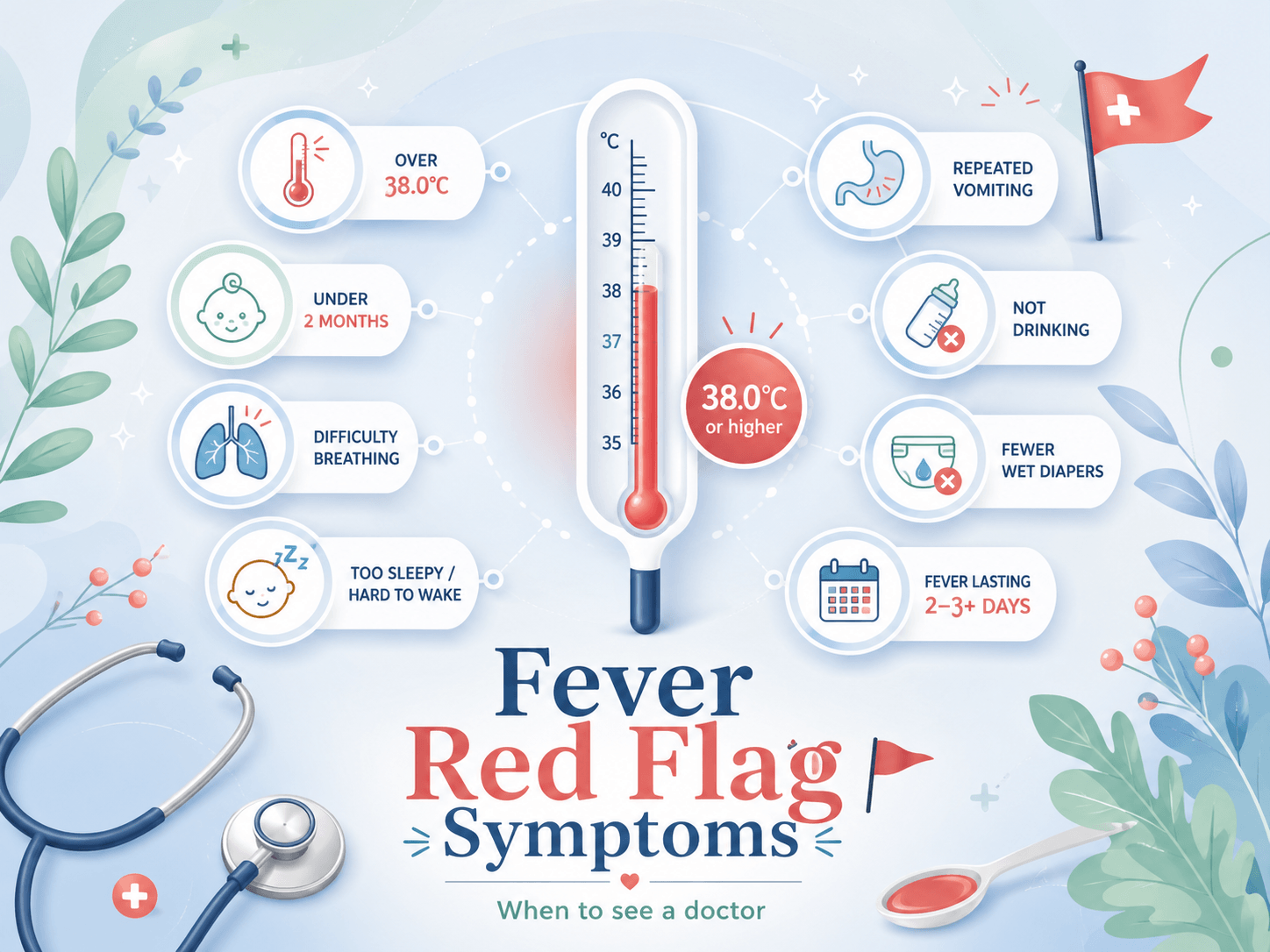
Fevers are the body’s natural response to infection. Fever is any temperature greater than 38.0C. Most fevers can be treated at home with paracetamol and ibuprofen. But if you’re ever concerned, or your child has certain high-risk symptoms, it’s important to see a doctor.
Reasons to see a doctor immediately:
-Your child has a fever (temperature over 38.0) that is not responding to medications like paracetamol and ibuprofen. The height of the fever does not always match to the severity of illness, but if you have tried medications at home and your child is still febrile, take your child to see a doctor.
-Your child is under 2 months old and has a fever. Very young babies have an immature immune system and are at higher risk for some bacterial infections. If your baby has a fever before they turn 2 months old, it’s important to see a pediatrician so they can decide what testing is needed.
Reasons to see a doctor as soon as you can:
-Fever that lasts longer than 2-3 days. Many kids will have fevers that last more than 2-3 days (and even up to 5-7 days) from viral infections. However, after 2-3 days it’s a good idea to have a doctor examine your child and make sure there are no signs of bacterial infection, which would be treated with antibiotics. Some common infections that are treated with antibiotics are ear infections and bacterial throat infections. Remember that antibiotics are not always helpful to shorten duration of fever. If your child has a viral infection, they likely will not help. Your doctor can recommend other medications to help support your child through their illness.
-Fever associated with any of the following symptoms:
-Difficulty breathing or swallowing
-Extreme sleepiness, confusion or difficulty waking your child
-Stiff neck
-Repeated vomiting
-Inability to drink, breastfeed or take oral medications
-Inconsolable crying or fussiness
-Fewer wet diapers than usual, or not producing urine at least every 6-8 hours
If you are concerned, you are always welcome to bring your child to M.P. Shah’s Accident and Emergency Department. We have doctors on site 24/7 to examine your child and answer your questions.

By Dr. Alexa Nicole Monroy