


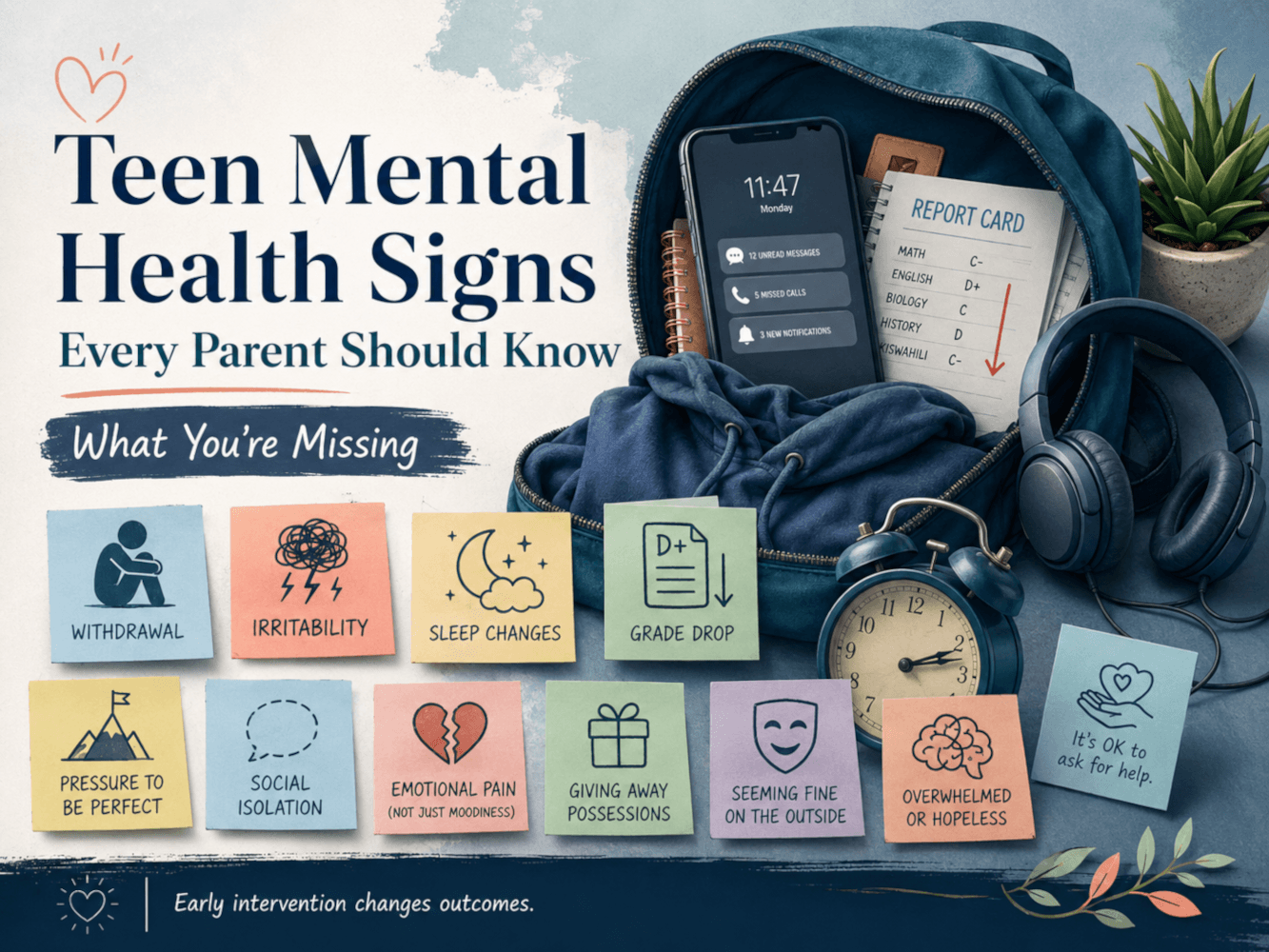
By the time most Kenyan parents notice something is wrong, their teenager has usually been struggling for while. Not because parents don’t care — but because teens are good at performing “fine.” And because we’ve been taught to watch for the wrong things.
The Signs We See — But Explain Away
- Persistent sadness or tearfulness lasting more than two weeks
- Sudden drop in grades — especially in a previously strong student
- Withdrawing from family, friends, or activities they once loved
- Changes in sleep: sleeping all day, or barely sleeping at all
These get dismissed as “teenage behaviour” or exam stress. The difference is duration and change from baseline. If it’s lasted more than two weeks and it’s not them — pay attention.
The Signs We Almost Always Miss
- Irritability, not sadness. Depression in teens often looks like anger, not crying. The child who snaps at everything may not be difficult — they may be overwhelmed.
- Sudden calmness after a period of distress. A teen who abruptly seems at peace can be a red flag, not a green one. Sometimes that calm follows a decision.
- Giving away possessions. Phones, clothes, money, sentimental items. Take it seriously.
- Covered arms in Nairobi heat. Long sleeves in 28°C weather. The body says what the mouth won’t.
- Hyper-achievement. The student burning themselves out chasing A’s while privately falling apart. High-functioning distress is still distress — and it’s common in our high-pressure exam culture.
- Sudden new friend group with no explanation. Or complete social isolation with screens as the only company.
What To Do
You don’t need the right words. You need to show up. Try:
- “I’ve noticed you seem unlike yourself lately. I’m not asking you to explain — I just want you to know I see you.”
- Don’t push for the conversation. Create space for it. Consistently.
- If your gut says something is wrong — trust it. Parents are often the first clinicians in the room.
Mental health support for adolescents is available at M.P. Shah Hospital.
Early intervention changes outcomes.
If you’re concerned about your child, speak to your doctor or ask for a referral to our Psychology team.

By Dr Prashna Shah – Clinical Psychology